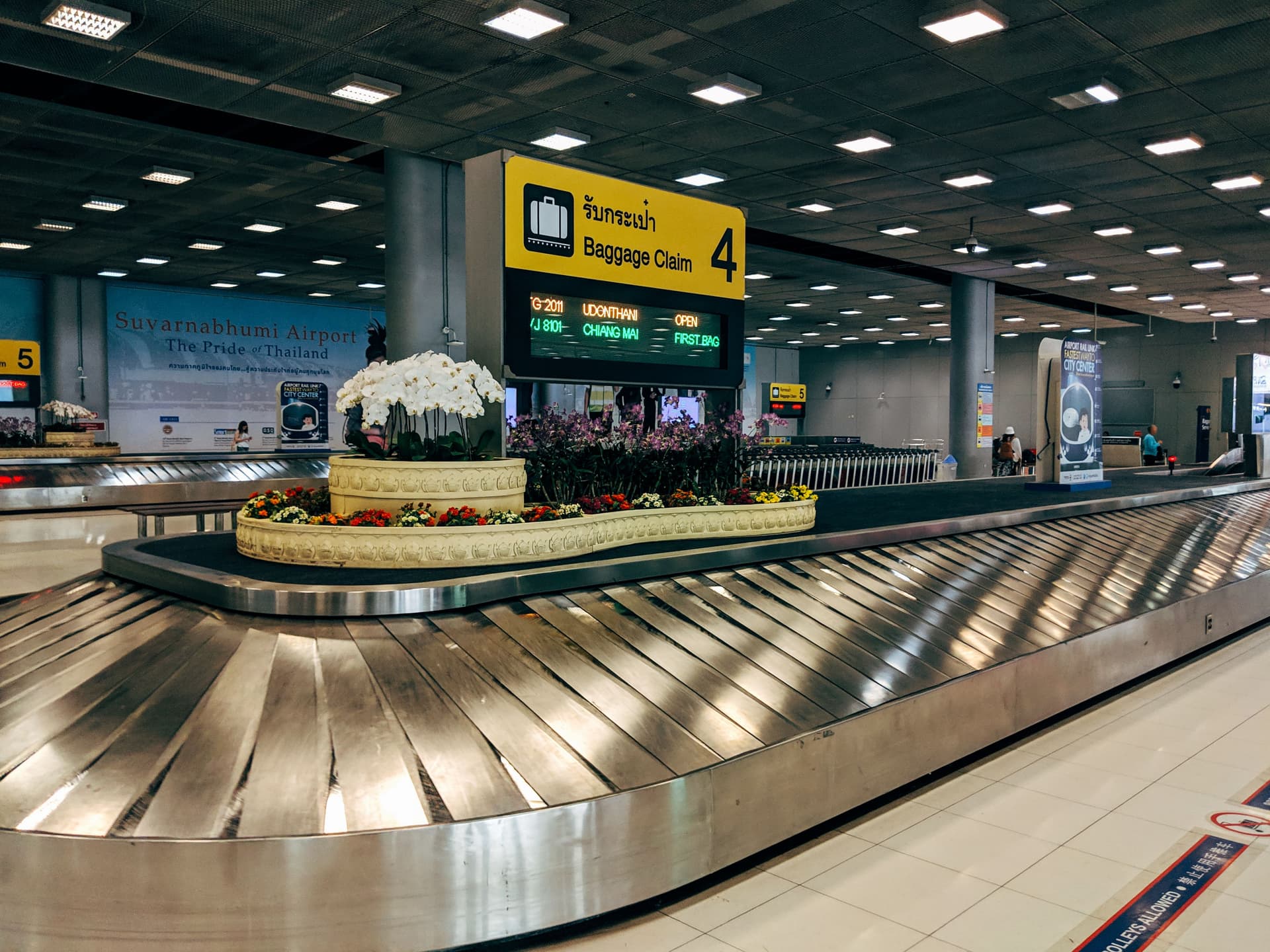
Each test asks a different question, and only the first one is asked at home. The bedroom floor wants to know how much fits. The front door wants to know what it weighs. A metal frame at the gate wants one thing only, and it cannot read the listing. Then a shared bin, then a belt that throws it, then a room where it has to open on a rack shorter than it is. Almost every claim on a luggage listing answers the first test. Fourteen of the forty-seven listings gathered here name a capacity. Zero of them say what the bag weighs.
Six stamps on a dotted line. Each one is a test the bag has to pass, and each asks a different question. Only the first of the 6 is asked at home.
Nobody approved your suitcase
No airline reviews luggage in advance. There is no register of approved models and no body that certifies a bag as admissible. Eight of the forty-seven listings on this site point the word at the bag or the cover anyway.
TSA does not certify luggage sizes at all. The scheme those words belong to is a lock standard, which is why the phrase means nothing printed on a fabric cover with no lock in it. One listing here does use it of an actual lock, and that one is not counted among the empty claims above.
The figure that settles it is the one your carrier publishes, for your fare, on the aircraft you are flying. We print no size limits here, because ours would be wrong for somebody on the day they read it.
The right-hand column is a count of the 47 listings gathered on this site, calculated from the data rather than typed. Some rows read zero, and those are the interesting ones.
Stage
What it tests
What listings say about it
How many listings say anything
Page
Stage 1Packing at Home
How much it holds
Capacity in liters, sometimes. This is the one test listings compete on.
It calculates nothing. It shows you what a listing states, stamps every gap where a listing states nothing, and reminds you that the frame at the gate measures the wheels. Only 3 of the 47 listings here give it enough to work with.
1. Which kind of bag
Backpacks & Travel Packs is off: No listing in this category states a full external size, so there is nothing here to check.
2. Which listing
3. Expansion open or closed
How this tool chooses what to offer
Only listings that state a full external size are offered here. A trade size such as 21 in is a naming convention, not a measurement, so it is not enough to work from.
A category with no such listing is switched off, and the reason is printed beside it.
The expanded option is switched off for a listing that claims no expansion, because it could not change a single line of the result.
Nothing is calculated. Every figure below is repeated from the listing, and every gap is left as a gap.
What the listing states
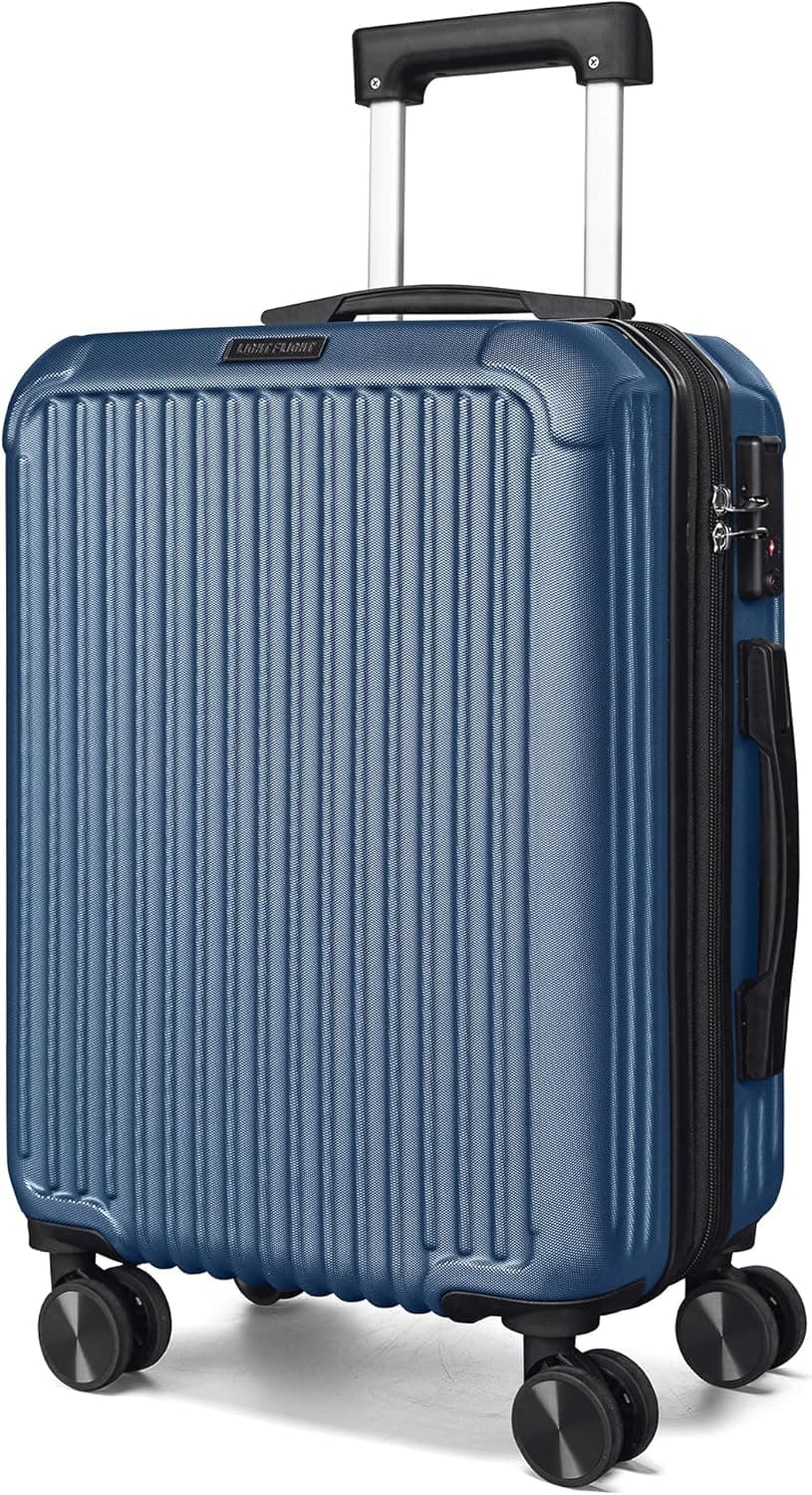
LIGHT FLIGHT 20" Carry-On with TSA Lock
External size
Stated
22 x 14 x 9 in
This is the body of the bag. Wheels, feet and an extended handle are not usually counted inside it.
Trade size
Stated
20 in
A naming convention rather than a measurement. It is not what a frame reads.
Capacity
Stated
35 L
A volume, which a frame does not measure. It is here so the two numbers can be seen together.
Empty weight
Not stated
Not stated
No listing on this site states one. Weigh the bag yourself before you pack it.
Expansion
Stated
20 percent more, from 35 L to 42 L
The expanded external size is not stated on any listing here, including this one.
Closed, the stated figure applies as far as it goes. The listing also states 20 percent more, from 35 L to 42 L, so there is a second, larger size that nobody has published.
Compare the numbers you measure against the figure your carrier publishes for your fare and your aircraft. We print no airline limits here, and no listing that says approved has been approved by anyone.
Measure it yourself
Stand the bag on the floor, packed the way you mean to travel, with the handle pushed all the way down.
Measure height from the floor up, starting at the bottom of the wheels rather than the bottom of the shell.
Measure width and depth across the widest points you can find, taking in side handles, feet and any external pocket.
If the bag expands, do all of it twice, once closed and once open, and keep both sets of figures.
Scroll sideways. Each card is a number a bag has, and a count of how many listings actually give it.
inches or centimeters
3
of 47 listings state a full external size
External Dimensions
An external dimension is three figures: length, width and depth, describing the box the bag occupies. It is the only specification on this site that a metal frame at a gate can act on, because a frame does not measure volume and does not read liters.
Capacity is a volume, given in liters, describing how much the bag holds when empty and open. It is calculated by the manufacturer, not measured to any common standard, and no listing on this site says which method produced its figure.
Empty weight is what the bag weighs with nothing in it. It is the simplest number on this site to define, the simplest to measure, and the one that is missing from every single listing we have gathered.
Expansion is a zip, usually running around the perimeter of a case, that releases a gusset and adds depth. On a soft bag it is a panel that lets the bag grow. Either way it is a second size for the same object.
Wheels and a telescoping handle are the two parts of a case that are not really the case. They are hardware bolted to it, they are outside the shell, and they are the parts that fail first.
What a listing volunteers, and what it will not say
Said freely
These are the claims that cost nothing to print and flatter whoever prints them.
Fourteen listings name a capacity in liters, which is the one figure that makes a duffel and a pack comparable.
Seventeen claim an expansion, almost always as the single word expandable with no figure behind it.
Twelve say whether the shell is rigid or soft, and a handful name the polymer.
Eight point the word approved at the bag or the cover, where nobody issued it and nobody checks it. One more points it at a lock, which is the one use of the word here with a standard behind it.
Said by almost nobody
These are the figures that would let you check a claim, which may be why they are missing.
Three of forty-seven state a full external size, and not one of those states it over the wheels.
Zero of forty-seven state an empty weight, in any unit, anywhere on the listing.
Zero describe how the bag opens or how much floor it needs to be open.
Zero name a test method behind any durability claim, although published methods exist and are easy to cite.
The catalog in four figures
47
Listings read
Each one written up from its own wording. The source list had one item twice; it appears here once.
6
Categories
Corrected from the list we were given, not reproduced from it. Every move is explained on the page it affects.
14
State a capacity
The best-answered number on the site, and the one that matters at exactly one of the six tests.
0
State an empty weight
The most consistent silence in the catalog. It is also the easiest figure in the world to measure.
Every number on a listing was chosen by somebody who wanted to sell you something
Five trip shapes. Each one puts the 6 tests in a different order of importance, and each one punishes a different habit.
One night
One Night Away
Out on Tuesday, back on Wednesday
One night is the shortest trip that still needs a bag, and it is the trip where almost anything works. A change of clothes, a wash bag, a charger. It fits in a daypack, it fits in a small duffel, and it would fit in a cabin case with room left over.
Punishes:Bringing structure you do not need. A rigid shell earns its keep by protecting things over distance, and one night is not a distance.
Three nights is the sweet spot for a cabin bag and the point at which the bag stops being incidental. You need more than one change of clothes, probably a second pair of shoes, and something for whatever the reason for the weekend was.
Punishes:Using the expansion outbound. Once it is open it rarely closes again, and the size the bag was chosen for stops applying.
Two weeks is the point at which a checked bag stops being optional for most people, and the whole shape of the problem changes. The bag is no longer something you carry; it is something you hand over and then hope about.
Punishes:Buying the largest case available. Volume runs out slowly and the weight allowance runs out quickly, so a bigger case usually means reaching the limit half empty.
One-bag travel is a discipline rather than a trip length. The rule is simple: whatever you are bringing goes in the cabin, and nothing goes in the hold. People do it for a weekend and people do it for a month.
Punishes:Using the expansion. A pack that expands by six liters is deeper than the pack that was described as a personal item, and depth is what runs out first.
A family trip is not one packing problem scaled up. It is several packing problems that have to be carried simultaneously by fewer people than there are bags, through a building designed for adults with one hand free.
Punishes:Matching sets bought on looks. A set is two empty weights, and neither of them is stated.
It divides a stated capacity by a stated set size and by the days you are away. If the bag has no stated capacity it says so and stops, rather than quietly using an average.
1. Stated capacity of the bag
Every figure below is one a listing on this site actually states. There is no average here and nothing has been rounded.
2. Which organizer set
3. How many days away
Result
Can be worked out
Both figures below are arithmetic on stated numbers.
3.0 L
Per piece in the set
2.0 L
Per day away
A workable division
Dividing 6 L into 2 pieces leaves about 3.0 L each, which sits inside the range ordinary cube sets are cut for. Whether the pieces physically fit is still a question of shape, and no listing on this site states a cube dimension.
Compression reduces the volume a load occupies. It does not reduce what that load weighs, and the scale at check-in reads weight.
The formula, printed
liters per piece = stated bag capacity ÷ pieces in the set
liters per day = stated bag capacity ÷ days away
Where the numbers come from
The capacity buttons are the capacities listings actually state. There is no average and no rounding among them.
If you choose a bag whose capacity is not stated, the calculation stops. It does not fall back to a typical figure, because a typical figure printed here would be read as a measurement.
The set sizes are the set sizes the organizer listings offer. Nothing has been added.
Both thresholds below are conversions from the definition of a liter as a cubic decimeter, not measurements of any product. No listing on this site states a cube dimension.
No panel of experts, no anonymous industry insider. Just the questions people ask and the shortest true answer to each.
Does airline approved mean anything?
No. It is a phrase a seller can print without asking anyone. No airline reviews luggage in advance and none of them keeps a register of approved models.
Does TSA approve luggage sizes?
No. TSA does not certify luggage or luggage dimensions at all. Those words refer to a lock standard, which is why they mean nothing printed on a fabric cover with no lock in it.
Why does this site print no airline size limits?
Because they differ between carriers, between fares and between aircraft, and because they change. Any figure we printed would be wrong for somebody on the day they read it.
Do compression cubes make a bag lighter?
No. They reduce the space a load occupies and leave its weight exactly where it was. If you are over an allowance, cubes cannot help; if you are out of room, they can.
Is a 21 inch case twenty-one inches tall?
Not as an object. A trade size describes the body by convention. The thing you carry is taller once the wheels are under it and taller again with the handle up.
Which number should I check first?
The one nobody prints. Weigh the empty bag and measure it across its outermost points, then compare those two figures with what your carrier publishes.
One listing from each of the six categories
These 6 cards are the listing that says the most in its category. Each card carries a stamp for every figure that separates it from its neighbors, and a plain sentence for every figure that does not.
None of the 6 listings here states an empty weight. That is why no card below carries an empty weight stamp: a label that reads the same on every card tells you nothing.
Carry-On Luggage
Only one you can check on paper
LIGHT FLIGHT 20" Carry-On with TSA Lock
SizeStated22 x 14 x 9 in
Trade sizeStated20 in
CapacityStated35 L
ExpansionStated20 percent more, from 35 L to 42 L
This is the most numerate listing in the catalog: a size, a capacity, an expanded capacity and a percentage, all in one place. It is also the listing that most needs its own caveat, because it states 22 x 14 x 9 in and then offers you 42 L. A case cannot expand and stay the size it was measured at.
Why:Its listing states 22 x 14 x 9 in and 35 L. Of the nine carry-on listings here, two state a size figure and only this one states a capacity as well.
Empty claim:This listing points the words airline approved at the bag itself. Nobody issues that and nobody checks it.
Best for
A traveler who wants to compare on paper before comparing at a frame, and who will read the expansion figure as a warning rather than a feature.
What is stated
It states an external size, a capacity and an expanded capacity, which no other listing in this category does.
The expansion is quantified twice over: 20 percent, and 35 L to 42 L.
The shell material is named as ABS and a Travel Sentry style lock is stated.
Silent and 360 are stated of the wheels, which at least tells you the configuration.
What is missing
The words airline approved appear on the listing and mean nothing about admission; your carrier publishes the figure that decides it.
The stated 22 x 14 x 9 in is a body size, and wheels, feet and the extended handle are not usually inside it.
At 42 L the case is no longer the object that was measured at 22 x 14 x 9 in, and the listing does not say what the expanded size is.
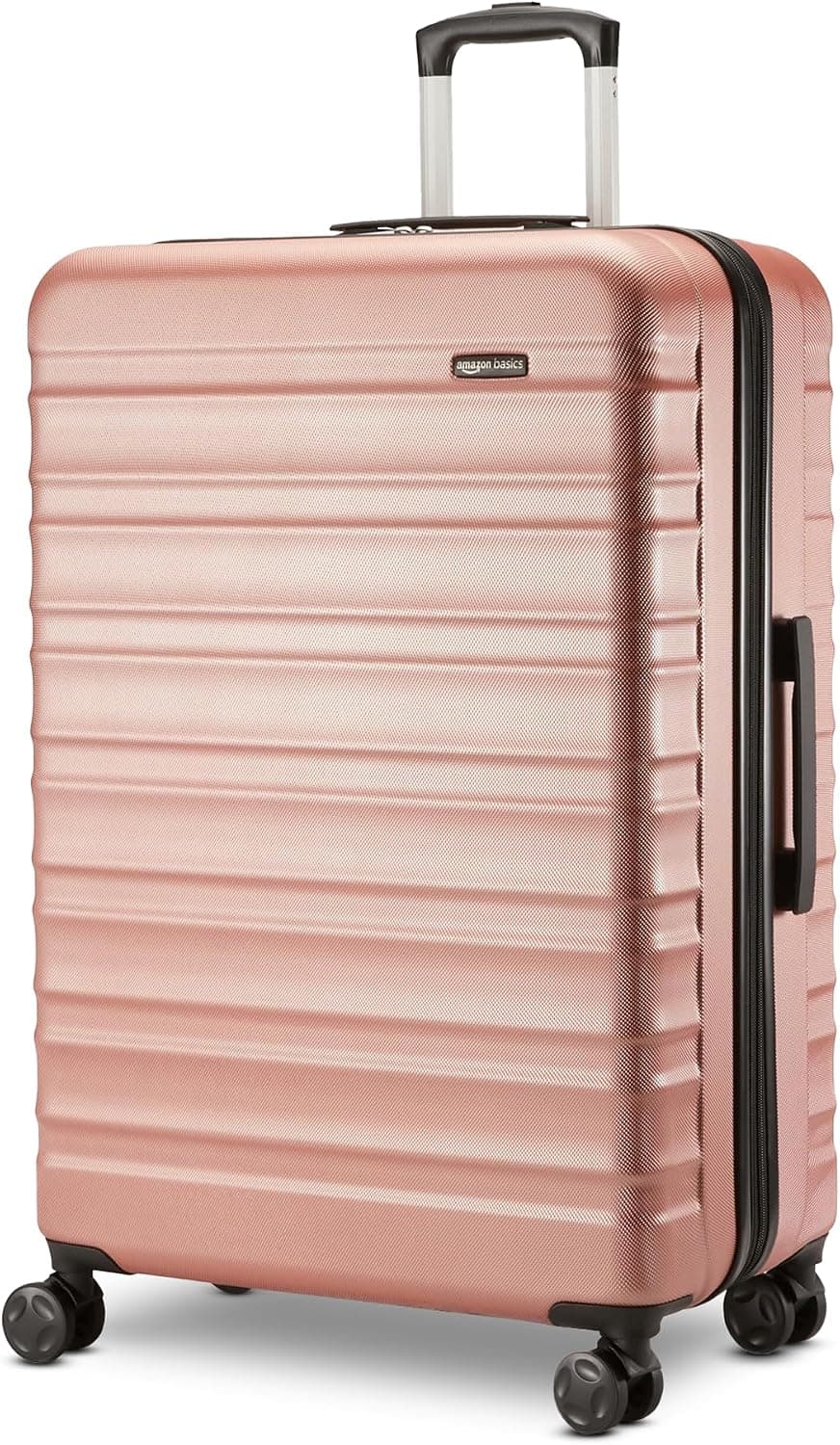
A 30 inch case with the only expansion figure in this category. Nothing in the listing addresses what happens to it on a belt, which is the test a checked bag is actually bought for. Scratch-resistant is a claim about the surface and not about the structure underneath it.
Why:Nothing in this category says anything about a belt or a hotel room. This is the only one of the four listings that puts a number on anything at all: up to 15 percent more space.
Best for
A traveler who wants a large case and wants the expansion quantified rather than gestured at.
What is stated
It puts a figure on the expansion: up to 15 percent more space.
Four multi-directional wheels are stated rather than implied.
The listing does not use the word approved anywhere.
The 30 inch trade size is stated plainly.
What is missing
No external dimensions are stated, so the 30 inch figure is a trade size only.
No empty weight is stated, and on a checked bag the empty weight comes straight off your allowance.
Scratch-resistant is a seller’s word with no test method behind it, and a scratch is not the thing a belt does to a case.
Trade sizeNot statedThe listing gives no trade size.
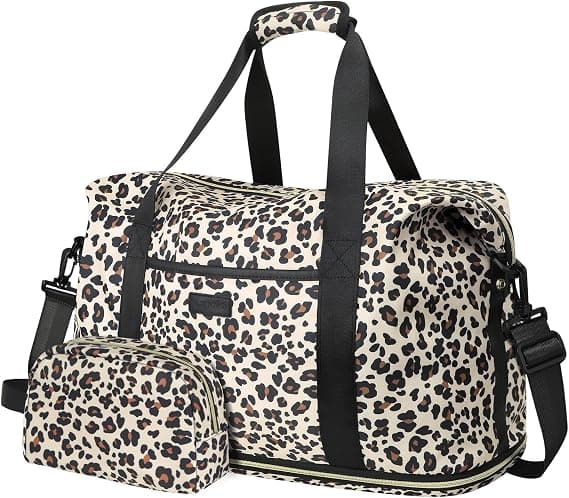
CapacityStated32 L
ExpansionStatedexpands from 32 L to 43 L
The only duffel here whose listing gives the capacity on both sides of the expansion, 32 L and 43 L, which is a genuinely useful pair of numbers. It also says waterproof, which is a word with no rating attached to it. A bag that grows by eleven liters grows in whichever direction the contents push it.
Why:It states expands from 32 L to 43 L. It is the only one of the nine duffel listings here that gives a capacity on both sides of the zip.
Best for
A short trip where you want the option of coming back fuller than you left.
What is stated
It states the capacity before and after expansion, which nothing else in this category does.
A toiletry bag is stated as included.
The stated 32 L is at the small end of this subgroup, which suits a bag meant to go in the cabin.
Carry-on use is described without the word approved being attached to it.
What is missing
Waterproof is the seller’s word. No standard, no rating and no test method is given.
No external dimensions and no empty weight are stated.
At 43 L the bag is a different object from the 32 L one, and a soft bag expands wherever it is loosest.
Trade sizeNot statedThe listing gives no trade size.
CapacityStated40 L
ExpansionStatedexpandable, no figure given
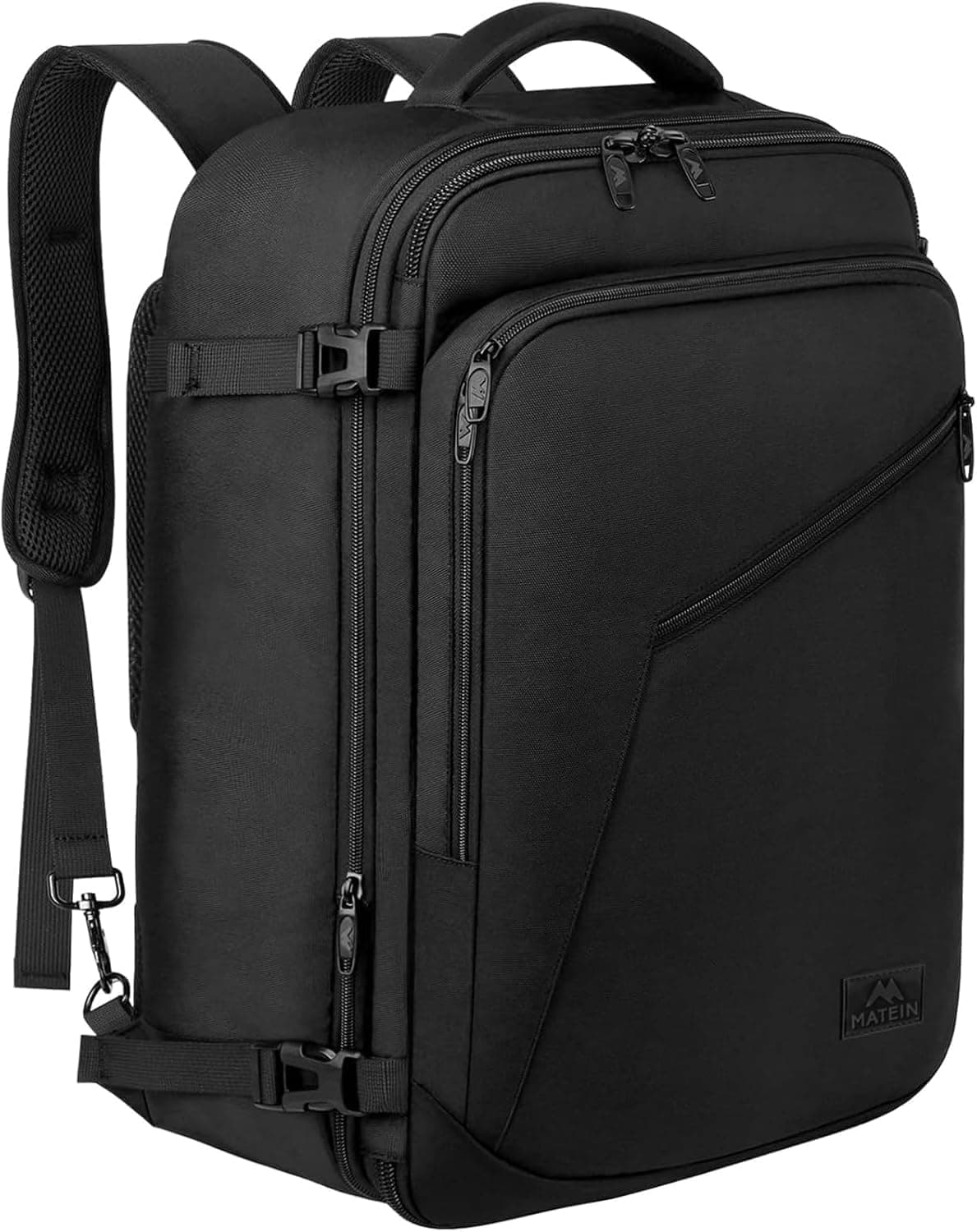
Forty liters, the largest capacity stated in this category, and the words airplane approved sitting right beside it. A backpack does not weigh less because it is on your back; it weighs the same and you feel it differently. Like every other listing in this category, this one does not say what that weight is.
Why:Its listing states 40 L, the largest capacity stated in this category. Like all thirteen listings here, it never says what the empty pack weighs, which is the number your shoulders are actually asking about.
Empty claim:This listing points the words airplane approved at the bag itself. Nobody issues that and nobody checks it.
Best for
One-bag travel for a traveler who will measure and weigh the loaded pack themselves.
What is stated
It states the largest capacity in this category: 40 L.
Expandable construction is stated, so the pack is not fixed at one depth.
It is described as a carry-on backpack, which names the intended role clearly.
The capacity figure lets it be compared directly with the duffels and the one carry-on case that state liters.
What is missing
The words airplane approved appear on the listing. No airline approves a bag in advance and the figure that decides it is your carrier’s.
No external dimensions and no empty weight are stated, so 40 L cannot be checked against anything.
Water resistant is unrated, and expandable is stated with no figure.
Trade sizeNot statedThe listing gives no trade size.
CapacityNot statedThe listing gives no capacity.
ExpansionNot statedThe listing gives no expansion.
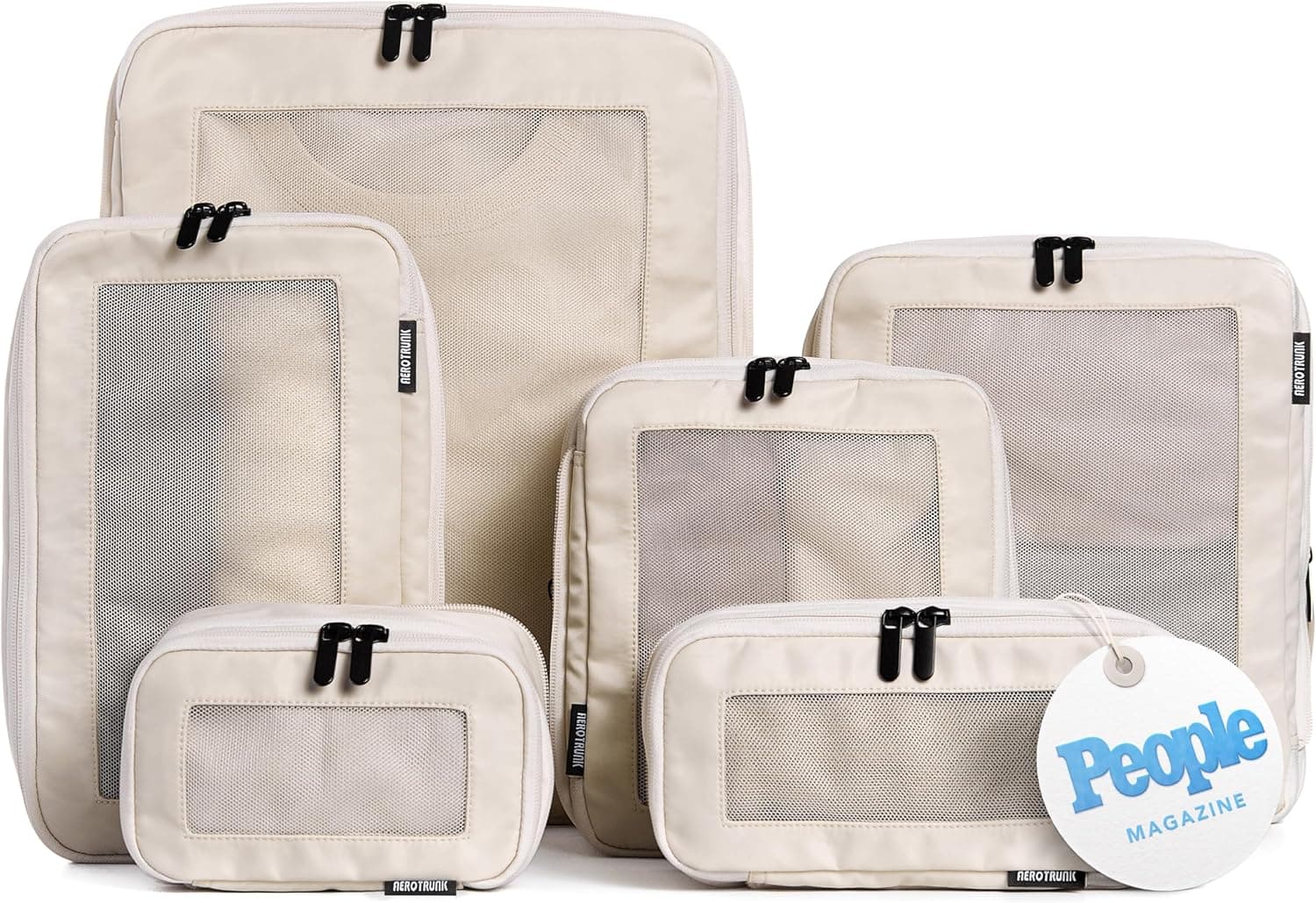
The only listing in this category that puts a percentage on anything, and the percentage is about space. That distinction is the whole reason this category exists on the site. Fifty percent less volume is not fifty percent less weight, and the scale at check-in reads the second number.
Why:It is the only one of the ten organizer listings here that puts a number on anything: 50 percent space savings. That is a claim about volume. No listing here, this one included, says what the set weighs.
Best for
A case that has run out of room but has not run out of allowance.
What is stated
It quantifies its claim: 50 percent space savings.
A fixed six-piece set is stated, with no variant guesswork.
Compression is stated plainly rather than implied.
A percentage claim can at least be argued with, which an adjective cannot.
What is missing
Fifty percent space savings is a volume claim with no stated starting point, so there is nothing to measure it from.
No cube dimensions and no set weight are stated.
Compression reduces the space a load occupies. It does not reduce its weight, and airlines weigh bags.
Trade sizeNot statedThe listing gives no trade size.
CapacityNot statedThe listing gives no capacity.
ExpansionNot statedThe listing gives no expansion.
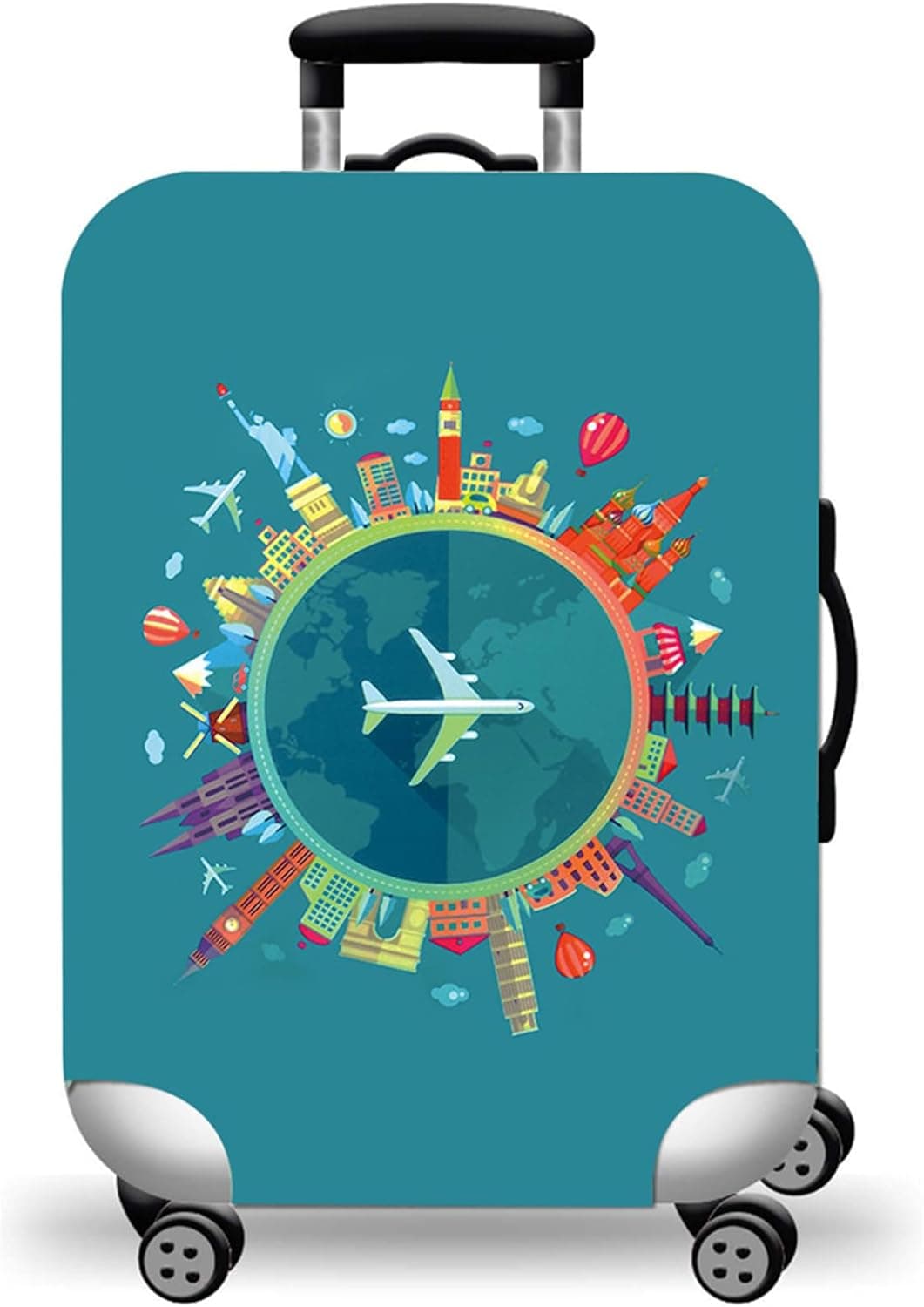
A stated fit range of fourteen inches, which is a wide claim for a stretch sleeve and the widest here. It carries the words TSA approved, which on a fabric cover is meaningless: the scheme those words belong to certifies locks, and this product does not have one. That is the honest reason this category exists on the site.
Why:Its listing states a fit range of 18 to 32 in, the wider of the two here. Both listings also use the words TSA approved, which describes a lock standard and says nothing about size.
Empty claim:This listing points the words TSA approved at the bag itself. Nobody issues that and nobody checks it.
Best for
A household with cases of several sizes and one cover budget.
What is stated
It states the widest fit range of the two covers here, 18 to 32 in.
The fabric is described as washable and elastic, both of which are checkable on arrival.
One cover covering that range means one purchase for a mixed set of cases.
The fit range is given in numbers rather than as small, medium or large.
What is missing
The words TSA approved appear on the listing and say nothing whatsoever about size. TSA does not certify luggage dimensions.
A fourteen inch fit range means the sleeve is loose on a small case or stretched thin on a large one.
Anti-scratch is unrated, and no weight or packed size for the cover itself is stated.
Every product page here is written from the wording of the listing and nothing else. Where a listing states a figure we repeat it and say who said it. Where it states nothing we write nothing.
We have never handled, weighed, measured or flown with any of these bags, and we do not pretend otherwise anywhere on this site.
We print no airline size or weight limits, in any unit. Those belong to your carrier and only your carrier can tell you the one that applies to you.
The source list we were given had one item in it twice and several items in the wrong category. We removed the duplicate and moved the strays, and each page says which ones moved and why.
Nothing here is ranked by commission, and nothing has been paid for. The order of the cards follows how much each listing actually says.
Every count on this site is calculated from the data at build time rather than typed into a sentence, so a figure and the list beside it can never drift apart.